
Safety and Regulatory Shifts
The landscape of e-bike regulation in the United States has underwent a major overhaul. Authorities are shifting away from treating all electric bicycles like traditional pedaled bikes, moving instead toward stricter vehicle accountability, mandatory electrical fire-safety standards, and crackdowns on high-powered models.
1. The Federal Battery Safety Mandate (CPSC)
To address the critical rise in lithium-ion battery fires, federal and state authorities are implementing a strict “gold standard” for electrical testing:
- The CPSC Proposal: The U.S. Consumer Product Safety Commission (CPSC) issued a landmark Notice of Proposed Rulemaking to establish 16 CFR Part 1265. This creates a mandatory federal baseline for all e-bike electrical components, aftermarket chargers, and conversion kits.
- UL 2271 vs. UL 2849: Under these new frameworks, newly sold e-bikes must utilize UL 2271 certified battery packs (which survive rigorous impact and crush testing) and UL 2849 holistic system certifications, ensuring the charger, motor, and battery management system (BMS) safely communicate.
- State Enforcement: In states like California, Senate Bill 1271 legally mandates that all new e-bikes distributed, leased, or sold within the state must bear these official UL certifications.
2. State-Level Licensing and Mandatory Insurance
Several states are breaking away from the traditional standard of “no license required” for micromobility, introducing unprecedented legal barriers for riders
- New Jersey: Effective in 2026, New Jersey’s e-bike law requires operators of low-speed electric bicycles to register their e-bikes with the MVC, carry liability insurance, and possess a valid driver’s or motorized bicycle license. Children under 15 are entirely banned from operating them.
- Michigan and Illinois: Proposed state house bills in Michigan aim to require teenagers to obtain specialized state licenses for Class 2 and 3 bikes, while banning children under 14 entirely. Illinois is pushing a framework to take effect in January 2027 that reclassifies devices exceeding 28 mph directly as motor vehicles subject to full registration and DUI laws.
3. “E-Bikes” vs. “E-Motos” (The Legal Line)
A sharp distinction is being drawn to combat high-powered electric dirt bikes (like Sur-Ron or Talaria models) that are falsely marketed as standard e-bikes.
- The 750W / 28 mph Cap: Under standard frameworks updated across states like Washington (via SB 6110), an electric two-wheeler must have functioning pedals and cap out at 750W of power to be treated as a bicycle.
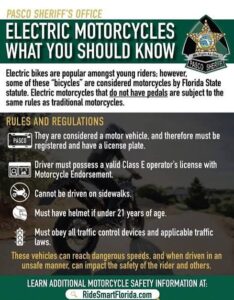
- The “Unlock Mode” Loophole Closed: New laws specifically target bikes that feature accessible digital settings allowing riders to “unlock” speeds beyond 28 mph. If a bike can bypass class restrictions or exceed 20 mph purely on a throttle, it is legally reclassified as an electric motorcycle, immediately requiring an M1 license and proper road safety hardware (blinkers, mirrors, and street lighting).
4. Shared Spaces and Path Speed Limits
Local municipalities are taking control of local infrastructure to protect pedestrians from high-speed bicycle traffic:
- Speed Restrictions: Many coastal and suburban municipalities have implemented strict path speed limits—capping speeds on sidewalks and multi-use pathways to 12 to 15 mph, regardless of whether the bike is a Class 3 model capable of 28 mph.
- Youth Helmet Mandates: States like North Carolina and Utah have updated rules requiring all minors under 18 to wear federal safety-approved helmets when riding faster Class 3 models.
- Crackdowns on Electric Motos: Cities like Los Angeles are cracking down on high-powered electric two-wheelers and “e-dirt bikes” that are marketed as bicycles but exceed legal Class 1–3 definitions (which cap speeds at 20–28 mph). Many of these unclassified vehicles now trigger requirements for proper street lighting, turn signals, and an M1 motorcycle license.
- Rising Safety Concerns: Recent University of Michigan Health data highlights a sharp rise in pediatric emergency room visits and hospitalizations from e-bikes and e-scooters, prompting health officials to push for better parental awareness of e-bike classes and mandatory helmet usage.
- The regulatory landscape for electric bikes in the U.S. has intensified. Federal agencies, state legislatures, and municipal city councils are actively implementing concrete enforcement measures to curb high-speed “e-moto” vehicles, eliminate fire hazards, and protect public spaces.
-
1. Stricter “E-Bike” vs. “E-Moto” Vehicle ReclassificationsAuthorities are closing loopholes on vehicles that disguise themselves as bicycles but operate like high-speed motorcycles. [1]
- Tamper-Proof Speed Governance: State laws, such as Washington’s SB 6110, specify that to qualify as an e-bike, a vehicle must feature fully operational pedals and a motor capped strictly at 750W. Manufacturers are responding by implementing tamper-proof digital firmware to prevent users from bypassing factory speed settings to unlock speeds over 28 mph. [1, 2]
- Elimination of the “Pedal Loophole”: Machinery capable of reaching 30 to 50 mph—such as certain Sur-Ron or Talaria dirt bikes—is legally classified as a motor vehicle or “e-moto,” even if aftermarket pedals are attached. Operating these on city streets without an M1 motorcycle license, proper reflectors, brake lights, and turn signals now carries strict misdemeanor or vehicle impoundment penalties. [1, 2]
🔒 2. Deep Dive: Federal and State Battery ComplianceTo halt a widespread spike in multi-family residential structural fires, the legal landscape for components has undergone structural changes. [1]- 16 CFR Part 1265: The U.S. Consumer Product Safety Commission (CPSC) has moved forward with a federal framework to codify UL 2849 (holistic electrical safety evaluating the motor, wiring, and charger together) and UL 2271 (battery pack puncture/crush standards) into mandatory federal safety rules. [1, 2]
- Supply Chain Impact: States like California are aggressively enforcing localized bans on the sale or lease of any micromobility device lacking third-party certified battery certifications. This shift is systematically pushing low-cost, uncertified budget manufacturers entirely out of the U.S. marketplace, driving up the baseline cost of entry for compliant e-bikes. [1, 2, 3]
📌 3. State-by-State Divergence in Legal RequirementsThe standard practice of treating an e-bike like a conventional pedaled bicycle has fragmented into a patchwork of strict regional requirements.State / Municipality License & Registration Insurance Mandate Notable Restrictions New Jersey Required (Motorized bicycle permit or standard driver’s license) Required (Liability insurance) Reclassified entirely as “motorized bicycles”; riders under 15 are barred from operating them. California None None Class 3 operators must be at least 16. Mandates advanced rear reflectors and UL battery certifications. ConnecticutNoneNoneCGS § 14-289k mandates universal helmets for all ages across all e-bike classes.
Operators must be 16+ for Class 3. Local Municipalities (e.g., Orange Beach, Auburn) Local permits vary None Strict path speed limits capping multi-use paths at 12–15 mph. ⚠️ 4. Youth Restraints and Parental AccountabilityA major driver behind these legal shifts is a sharp rise in pediatric emergency room hospitalizations.- Graduated Youth Restrictions: States are enacting stricter age tiers. For instance, Arizona’s updated rules require minors under 21 to wear protective headgear across all e-bike classes. Additionally, teens under 16 face strict online safety-course prerequisites before operating Class 2 or 3 bikes unsupervised on public roads.
- Parental Liability Ordinances: Municipalities (such as Fort Atkinson) are passing ordinances that include explicit parental responsibility provisions. Under these updates, if a minor under the legal age limit is caught operating an unpermitted Class 3 or modified e-bike, parents face direct civil citations and escalating monetary fines
Leave a Reply