
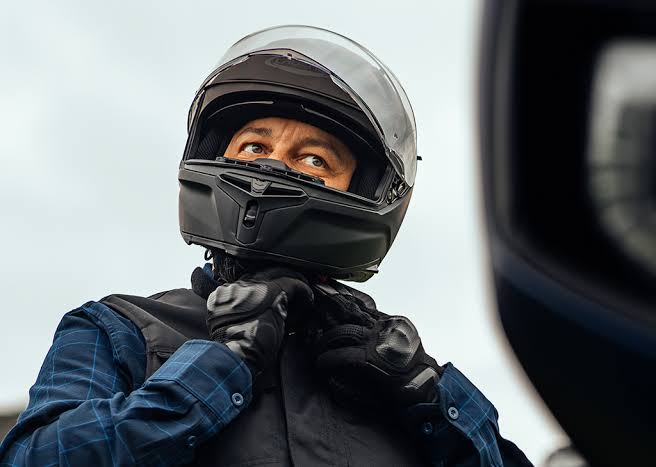
Create a checklist for choosing a well-fitting full-face helmet
Choose a well-fitting full-face helmet by measuring your head, matching your head shape, and performing essential safety and movement tests.
Step 1: Head Measurement
-
- Find the size: Wrap a soft tape measure about 2.5 cm (one inch) above your eyebrows and around the widest part of your head.
- Check the chart: Compare your measurement in centimeters or inches to the manufacturer’s specific size chart.
- Go smaller if between sizes: If your measurement falls between two sizes, start with the smaller size because padding breaks in over time.
Step 2: Head Shape Match
-
- Identify shape: Determine if your head is round, intermediate oval, or long oval.
- Avoid hot spots: Ensure the helmet matches your head shape to prevent painful pressure points on your forehead or temples.
Step 3: Initial Fit & Cheek Contact
-
- Firm resistance: The helmet should go on with firm, even resistance and feel tight.
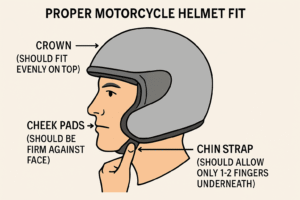
- Cheek compression: Cheek pads should press firmly against your face, creating “chipmunk cheeks” without causing sharp pain.
- No gaps: The crown and brow pad should contact your head evenly with no excessive gaps.
Step 4: Safety & Movement Tests
-
- Skin movement test: Fasten the chin strap, then try to move the helmet side to side and up and down; your skin should move with the helmet rather than sliding independently.
- Roll-off test: Grab the back bottom edge of the helmet and try to roll it forward off your head; a secure helmet will not roll off.
- Chin strap check: Adjust the strap so it is snug under your chin, leaving just enough room to insert one or two fingers.
Step 5: The Wear Test
- Wait 10–15 minutes: Keep the helmet on indoors for at least 10 to 15 minutes to spot hidden pressure points or discomfort.
Here are the top-rated full-face helmets across different budget levels and head shapes to help you find the right fit.
Budget-Friendly / Entry-Level Options
An exceptionally safe budget helmet featuring an advanced polycarbonate shell and a highly efficient ventilation layout. Ideal for an intermediate oval head shape.
Offers a lightweight polycarbonate build with aggressive MotoGP styling and multiple visor setups at a very approachable price. Best for an intermediate oval shape.
Brings aerodynamic track racing geometry, a wide 190-degree panoramic field of vision, and a reliable double D-ring strap to everyday street commuters. Fits intermediate oval heads.
Mid-Range / All-Around Performers
A highly versatile option equipped with an internal drop-down sun shield and a specialized kinetic polymer alloy shell. Perfect for intermediate oval riders who commute day and night.
A robust everyday helmet that features integrated active brake lights on the shell rear for maximized visibility. Well-suited for rounder intermediate head shapes.
Premium / High-End Performers
The premier standard for sport-touring, blending handmade Japanese fiberglass construction, incredible sound insulation, and seamless intercom integration. Fits a standard intermediate oval head shape.
A legendary, hand-crafted racing helmet that offers unmatched shell strength and adjustable interior padding. Exceptional for intermediate oval shapes needing precision fitting.
A dedicated premium helmet meticulously engineered from the ground up to eliminate forehead hot spots for riders with a true long oval head shape.
If you are looking for general recommendations that work well for most riders and easily accommodate prescription glasses, here are the key features and top-rated options to look for:
Features to Look For
- Eyeglass Channels: Look for helmets with pre-cut grooves in the cheek pads.
- These channels prevent the helmet from crushing your glasses frames against your temples.
- Intermediate Oval Shape: Most riders have an intermediate oval head shape.
-
- Choosing a helmet with this fitment prevents the front-to-back pressure common with rounder shapes.
Highly Recommended Helmet Models
- Shoei RF-1400: Known for its plush, premium interior.
- It features excellent built-in eyeglass channels that allow frames to slide in effortlessly without bending.
- HJC i10: An excellent, budget-friendly option.
- It is universally shaped and features padding designed to accommodate glasses comfortably.
- Arai Signet-X / Quantum-X: Perfect if you know your specific head shape.
- The Signet-X is designed for long oval heads, while the Quantum-X is for rounder heads.
- Both feature “peel-away” cheek pad layers to customize the fit around your glasses.
An excellent all-around starting choice is a mid-range, intermediate-oval full-face helmet equipped with dedicated eyeglass grooves to ensure your frames slide in easily without bending.
Top General Recommendations
-
- Shoei RF-1400: A premium, whisper-quiet choice featuring plush interior padding and specialized temple channels that stop glasses from digging into your head.
- HJC i10: A highly rated, budget-friendly option that carries a modern safety rating and leaves ample room around the ears for glasses arms.
- Scorpion EXO-R420: A fantastic entry-level contender featuring a slick “KwikWick” liner and “KwikFit” cheek pads designed specifically to accommodate common frame styles.
👓 Quick Tips for Riding with Glasses
- Straight Arms Work Best: Glasses with straight, flat temples (arms) slide into helmet padding much easier than frames that curve aggressively behind your ears.
- Put the Helmet on First: Always put your helmet on and secure the chin strap before sliding your glasses through the eyeport.
- Anti-Fog Coating: Full-face shields trap breath, which fogs up prescription lenses quickly.
- Consider using an anti-fog spray or look for a helmet that accepts a Pinlock anti-fog insert.
Leave a Reply